Infection Prevention and Control (IPC)
Health facilities can spread infections if sick patients are not recognised early. SECURE-Nigeria helped 30 facilities identify and separate patients with respiratory infections and build lasting habits that prevent infections spreading.
Infection prevention and control (IPC) is the set of practices, such as screening patients, isolating suspected cases and hand hygiene, that stop infections spreading in health facilities. COVID-19 showed the need to move from separate, disease-by-disease efforts to integrated IPC programmes that cover many infections.
The Institute of Human Virology Nigeria (IHVN) already supported IPC in its HIV treatment programme funded by the United States Centers for Disease Control and Prevention (US CDC). Building on this, between 2020 and 2022 IHVN set up and strengthened IPC structures at 30 antiretroviral therapy (HIV treatment) clinics in the Federal Capital Territory and Nasarawa State. This included respiratory triage: screening patients on arrival so those with possible COVID-19 or tuberculosis are identified and separated quickly. From October 2023 to September 2024, additional funding added a hand hygiene programme.
The challenge
What we did
Set up IPC teams
Established and strengthened IPC structures and trained staff at 30 HIV treatment clinics.
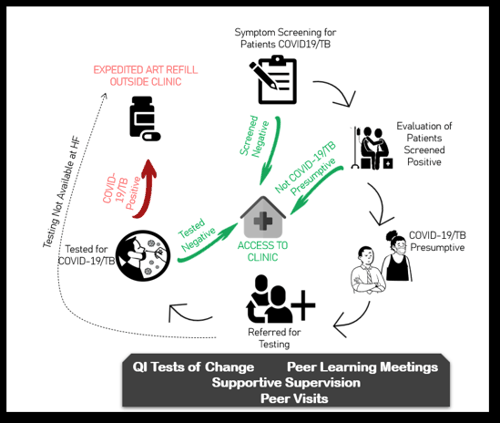
Screened patients on arrival
Introduced respiratory triage to identify and separate patients with possible COVID-19 or tuberculosis quickly.
Improved practice step by step
Used training, quality improvement methods, supervision visits and peer meetings between facilities to improve screening.
Promoted hand hygiene
Ran a hand hygiene programme combining several approaches in the clinics from October 2023 to September 2024.
Measured progress
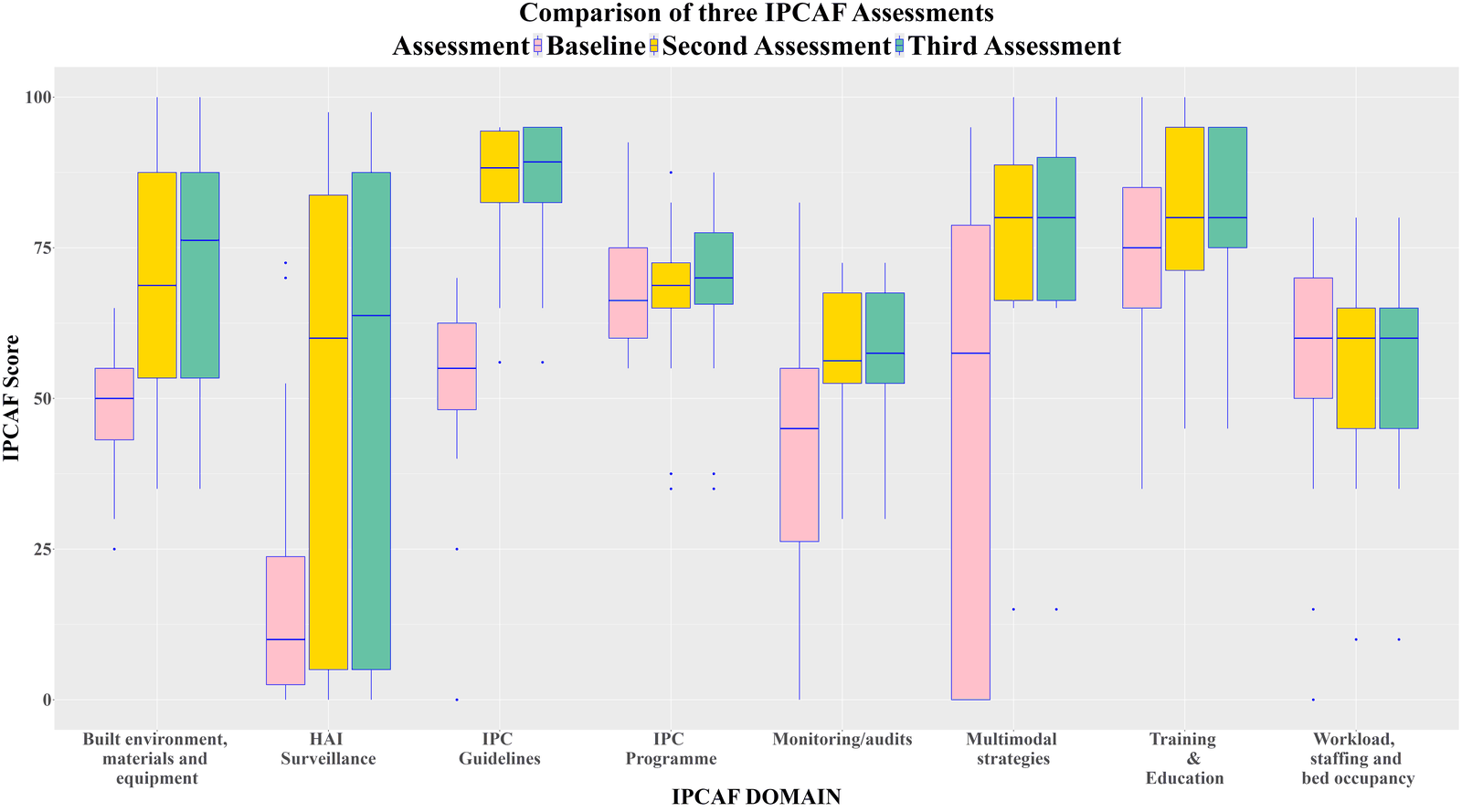
Assessed each facility in 2021, 2022 and 2023 against the eight core components of IPC defined by the World Health Organization.
Charts and diagrams
From the IPC technical brief. Select an image to view it full size.
Results
Cases found early
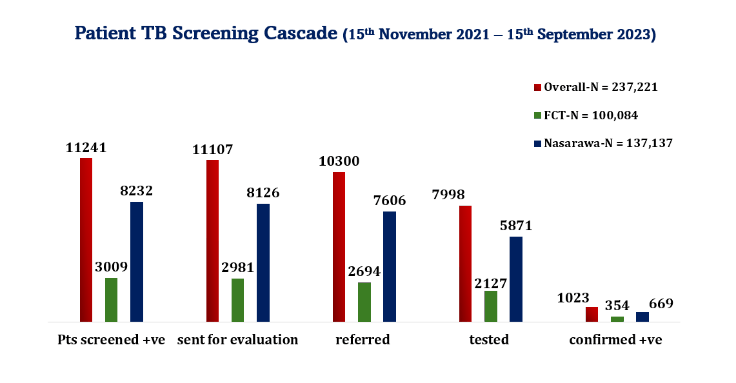
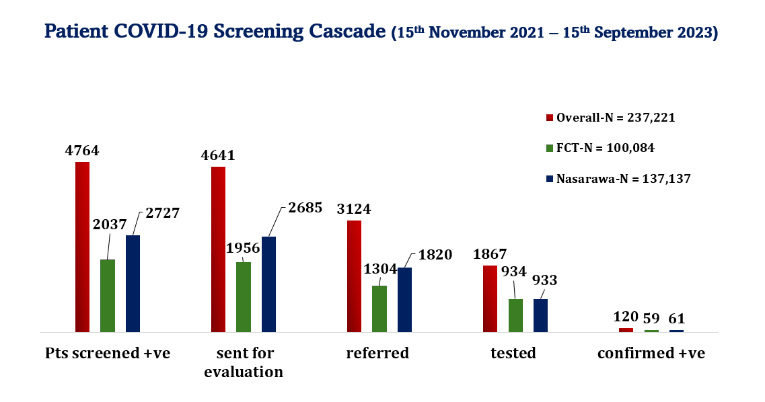
Between November 2021 and September 2023, 237,221 patients were screened on arrival. 11,241 had symptoms of possible tuberculosis; 7,998 were tested and 1,023 confirmed. 4,764 had symptoms of possible COVID-19; 1,867 were tested and 120 confirmed. Each confirmed patient was found before they could pass the infection on inside the clinic.
Lasting structures
IPC teams set up during the pandemic went on to support routine hand hygiene improvement.
Progress against World Health Organization standards
Across three yearly assessments, the middle (median) facility score rose in most of the eight World Health Organization core components. The largest gains were in surveillance of infections caught in health facilities, IPC guidelines, the physical environment and supplies, and combined improvement strategies. Workload, staffing and bed occupancy did not improve.
Better hand hygiene habits
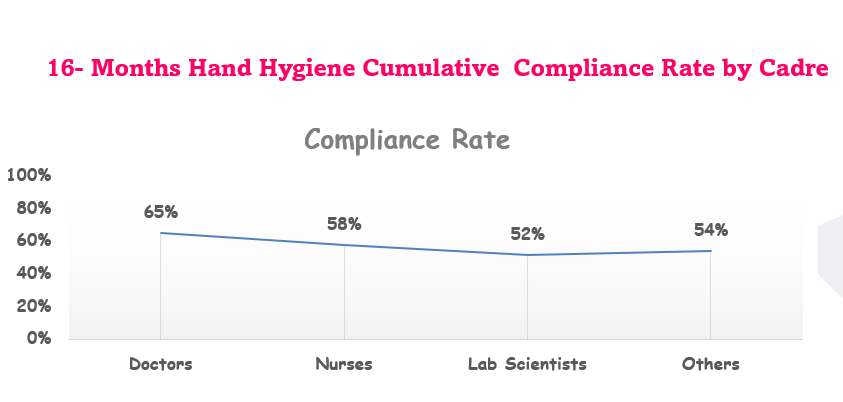
Over 16 months of the hand hygiene programme, observed compliance was 65% among doctors, 58% among nurses and 52% among laboratory scientists, giving each group a clear baseline to improve on.
Lessons learned
- Patient screening worked best through a combination of training, quality improvement, supervision and learning between facilities.
- Screening of health workers themselves needs to be part of a wider occupational health strategy to improve uptake.